PAM Solution Saudi Arabia: Securing Privileged Access for Modern Enterprises
Explore how a PAM solution in Saudi Arabia helps enterprises secure privileged access, support NCA requirements, and reduce identity security risks.
Introduction
Saudi organizations are operating in increasingly complex digital environments. Cloud platforms, remote administration, third-party access, and privileged accounts now form part of everyday IT operations. At the same time, a compromised administrator account can provide attackers with access far beyond a normal user account.
This makes PAM solution Saudi Arabia a growing cybersecurity priority for enterprises that need stronger control over privileged identities.
Privileged Access Management (PAM) helps organizations control who can access critical systems, what permissions they receive, and how privileged activity is monitored. For Saudi businesses, PAM also has an important connection with national cybersecurity requirements.
Why Privileged Access Management Matters in Saudi Arabia
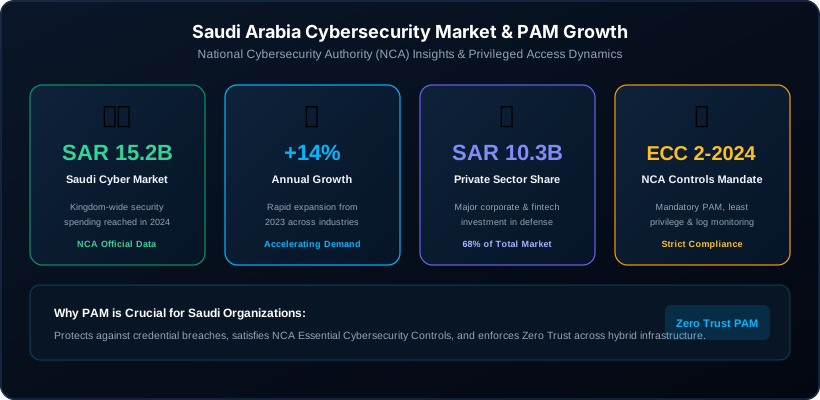
Saudi Arabia has developed a mature and rapidly growing cybersecurity ecosystem. According to the National Cybersecurity Authority (NCA), the Kingdom's cybersecurity market reached SAR 15.2 billion in 2024, representing 14% growth compared with 2023. Private-sector organizations accounted for SAR 10.3 billion of that spending.
This growth reflects increasing investment in protecting digital infrastructure.
However, technology alone does not eliminate identity-related risks. Organizations also need to control powerful accounts used by system administrators, database teams, cloud engineers, vendors, and other privileged users.
That is where Privileged Access Management Saudi Arabia strategies become valuable.
What Is a PAM Solution?
A PAM solution provides security controls for accounts with elevated permissions. Instead of allowing privileged users to maintain unrestricted access, organizations can apply policies around authentication, authorization, credential management, monitoring, and access duration.
A modern PAM platform can help organizations:
- Control privileged accounts and credentials
- Apply least-privilege access
- Enforce stronger authentication
- Manage remote privileged access
- Monitor privileged sessions
- Record administrative activity
- Support just-in-time access
- Review and revoke unnecessary privileges
The objective is straightforward: give users the access they need without giving them more power than necessary.
NCA PAM Requirements and Privileged Access
For organizations operating in Saudi Arabia, PAM is not simply a technology trend.
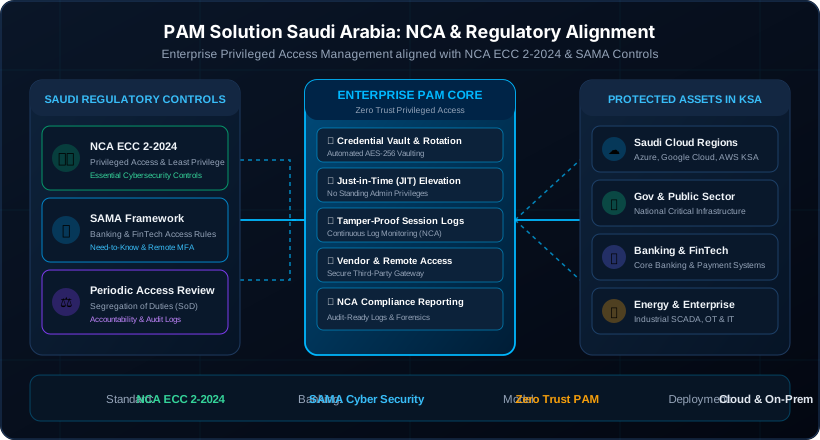
The NCA's Essential Cybersecurity Controls (ECC 2-2024) include privileged access management within identity and access management requirements. The controls address principles including least privilege, segregation of duties, privileged access management, and periodic review of identities and access rights.
The NCA's implementation guidance goes further by recommending modern technologies and mechanisms for PAM. It also addresses approval of privileged access based on functional responsibilities and continuous monitoring of privileged-account security logs.
This makes NCA PAM requirements an important consideration when Saudi organizations evaluate their privileged access strategy.
A PAM platform should therefore support security teams in implementing appropriate controls rather than simply storing administrator passwords.
What Should Enterprises Look for in PAM Solutions in Saudi Arabia?
Choosing between different PAM solutions in Saudi Arabia requires more than comparing feature lists.
Organizations should evaluate how a solution handles their actual access environment.
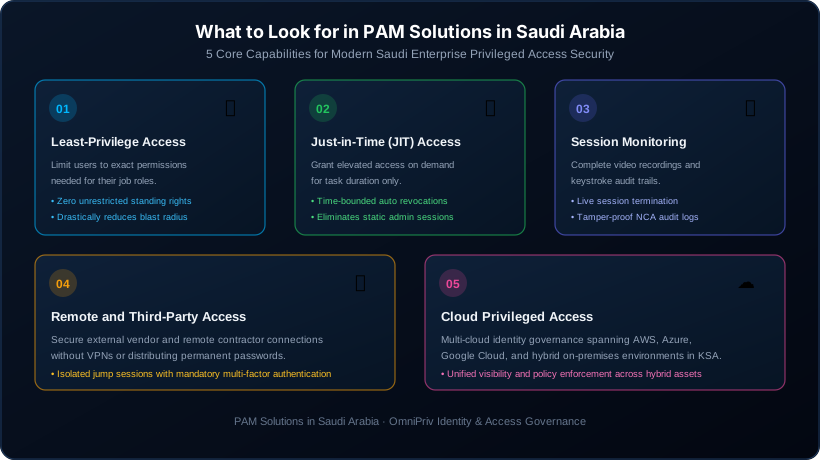
1. Least-Privilege Access
Users should receive only the permissions required for their responsibilities. This reduces unnecessary exposure if an account becomes compromised.
2. Just-in-Time Access
Instead of permanent administrative privileges, organizations can provide elevated access only when required. Once the task ends, that privilege can be removed.
3. Privileged Session Monitoring
Security teams need visibility into privileged activity. Session monitoring can help organizations investigate suspicious behavior and improve accountability.
4. Remote and Third-Party Access
Vendors and remote administrators can create additional security challenges. PAM should provide controlled access without creating unnecessary permanent privileges.
5. Cloud Privileged Access
Modern enterprises increasingly operate across AWS, Microsoft Azure, Google Cloud, and hybrid environments. A suitable PAM strategy should therefore extend beyond traditional on-premises infrastructure.
PAM for Saudi Banks and Regulated Organizations
The financial sector provides a clear example of why privileged access controls matter.
SAMA's Cyber Security Framework requires regulated organizations to restrict access according to business requirements and need-to-have or need-to-know principles. Its identity and access management controls also address privileged and remote access, MFA, periodic reviews, individual accountability, and monitoring of non-personal privileged accounts.
For these organizations, an enterprise PAM solution Saudi Arabia can become part of a broader identity security and compliance strategy.
The same principle applies across other sectors handling sensitive information or critical infrastructure.
How OmniPriv Approaches Privileged Access Management
OmniPriv is designed around a modern approach to privileged access security.
Rather than treating PAM as a password vault alone, organizations can use a broader framework covering privileged identities, access control, monitoring, and least-privilege enforcement.
OmniPriv supports modern enterprise requirements such as Just-in-Time access, Zero Trust principles, cloud environments, and controlled privileged access.
This approach helps security teams move away from permanent administrative privileges and toward more controlled, measurable access.
Build a Stronger Privileged Access Strategy
A successful PAM implementation begins with understanding the organization's privileged access environment.
Security teams should identify privileged accounts, determine where those accounts are used, review existing permissions, and identify unnecessary or excessive access.
They should then define policies for approval, authentication, monitoring, periodic review, and privilege removal.
For Saudi organizations, these activities should also be mapped against applicable regulatory and cybersecurity requirements.
The result is more than a PAM deployment. It becomes a structured approach to reducing identity-related risk.
Conclusion
The demand for a PAM solution Saudi Arabia organizations can rely on will continue as enterprises expand their cloud infrastructure, remote operations, and digital services.
PAM helps organizations control powerful identities before those identities become an easy path to critical systems.
For Saudi enterprises, the opportunity is particularly significant because privileged access management aligns with important NCA identity and access management requirements.
Organizations should therefore look beyond basic credential management and consider a modern PAM strategy covering least privilege, just-in-time access, privileged session monitoring, remote access, cloud environments, and continuous visibility.
OmniPriv helps enterprises take a modern approach to privileged access security—giving organizations greater control over who gets privileged access, when they receive it, and what they can do with it.
Frequently Asked Questions (FAQs)
1. What is a PAM solution in Saudi Arabia?
A PAM solution helps Saudi organizations secure, control, monitor, and manage privileged accounts and access to critical systems.
2. Why is PAM important for Saudi organizations?
PAM helps reduce excessive privileges and supports identity security requirements, including controls addressed by the NCA's Essential Cybersecurity Controls.
3. What are NCA PAM requirements?
NCA requirements include privileged access management alongside principles such as least privilege, segregation of duties, and periodic access reviews.
4. What should enterprises consider when choosing PAM solutions in Saudi Arabia?
Organizations should evaluate privileged account management, JIT access, MFA, session monitoring, remote access, cloud support, integrations, scalability, and regulatory requirements.
5. Can PAM support Zero Trust security?
Yes. PAM can support Zero Trust by limiting privileged access, enforcing stronger authentication, and providing greater control and visibility over sensitive resources.
See OmniPriv in Action
Talk to our team to see how OmniPriv addresses the challenges in this article for your specific environment.