
On this page
Introduction
In today's expanding digital ecosystems, protecting the keys to the kingdom is no longer optional. As cyber threats target high-level credentials to breach enterprise networks, traditional security models fall short. This is where PAM as a service comes into play, delivering a modern, scalable approach to managing and monitoring who has access to your most critical data and infrastructure.
By shifting from on-premises deployments to cloud-delivered models, organizations can enforce strict zero-trust principles without the heavy operational overhead. If you are new to the concept, our complete guide to privileged access management covers the full foundation before you dive into the cloud-delivered model explored here.
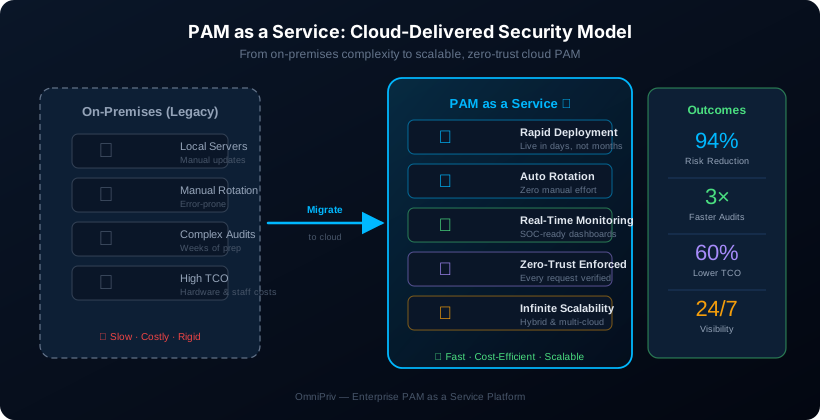
The Evolution of Privileged Access
Historically, managing privileged accounts meant maintaining complex internal servers and manually rotating passwords. Today, PAM as a service transforms this model by moving robust security capabilities to the cloud. This evolution allows businesses of all sizes to rapidly deploy enterprise-grade access controls, monitor administrative sessions in real time, and isolate critical systems from credential-based attacks.
Cloud-based delivery means security teams can focus on strategic governance rather than maintaining infrastructure, ensuring that high-risk access is continuously verified and strictly controlled regardless of where the user is located.
To understand how this threat landscape has evolved, see our analysis of 2025's biggest privileged account breaches and the attack patterns behind them.
Key Benefits of PAM as a Service
Adopting a cloud-based privileged access model offers several strategic advantages for modern enterprises:
Rapid Deployment and Scalability: Unlike traditional software, cloud-delivered PAM can be rolled out across hybrid environments in days. It scales seamlessly as your organization adds new servers, cloud instances, or third-party vendors.
Cost-Effective Operations: By eliminating the need for dedicated hardware and continuous software updates, this model reduces the total cost of ownership while maintaining high security standards.
Enhanced Threat Visibility: Continuous monitoring and session recording provide real-time insights into administrative activities, helping security operations centers (SOCs) detect anomalies instantly.
Implementing PAM Best Practices
To maximize the value of your deployment, integrating PAM best practices is essential. Start by enforcing the principle of least privilege (PoLP), ensuring users only receive the exact access required for their specific tasks, and only for the duration of that task.
Additionally, organizations should mandate multi-factor authentication (MFA) for all privileged accounts and implement automated password rotation. Regular audits of access logs and enforcing just-in-time (JIT) access are also critical PAM best practices that drastically reduce the attack surface and prevent lateral movement if a standard account is compromised.
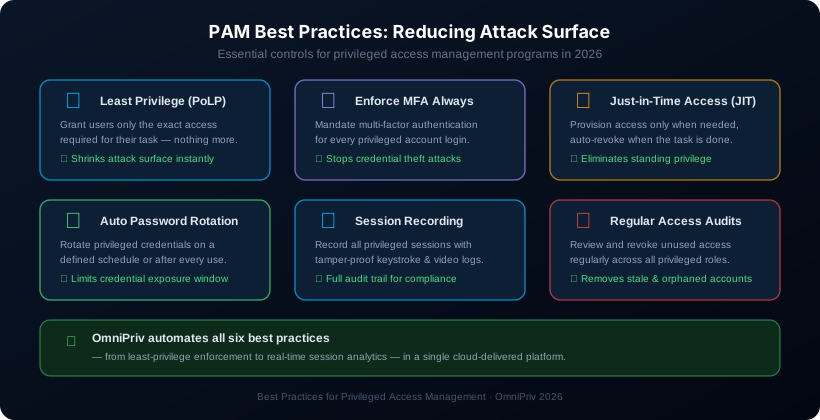
For a deeper dive into just-in-time provisioning, our dedicated guide on JIT access and why it is replacing standing privilege covers implementation approaches in detail. You can also review the full set of privileged access management best practices from our 2026 architecture guide.
Choosing the Right PAM Services
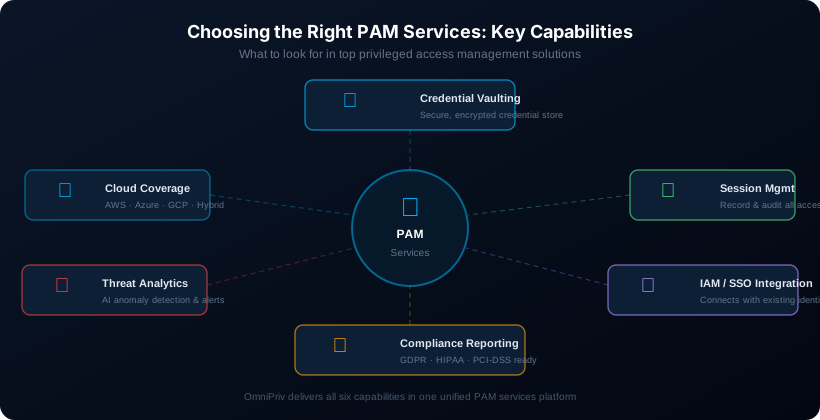
When evaluating the market, it is crucial to select PAM services that align with your specific hybrid or multi-cloud architecture. Look for providers that offer comprehensive capabilities, including credential vaulting, session management, and seamless integration with your existing Identity and Access Management (IAM) and Single Sign-On (SSO) tools.
Expert PAM services should also provide detailed analytics and compliance reporting, making it easier for organizations to pass regulatory audits (such as GDPR, HIPAA, or PCI-DSS) by proving that strict controls govern all administrative access.
For healthcare organizations, our HIPAA and PAM guide maps these capabilities directly to regulatory requirements. For financial institutions, the Meridian Bank case study shows exactly how these PAM services deliver measurable compliance outcomes.
Top Privileged Access Management Solutions: The OmniPriv Advantage
Navigating the landscape of the top privileged access management solutions can be daunting, but choosing a platform built for modern threats simplifies the process. OmniPriv stands out as a premier solution, offering a comprehensive suite of tools designed to secure, manage, and monitor privileged accounts across any environment.
As one of the top privileged access management solutions, OmniPriv delivers seamless credential vaulting, advanced session recording, and automated threat response. By integrating OmniPriv into your security posture, your organization gains unparalleled visibility and control, ensuring that your most critical assets remain protected against both external attacks and insider threats.
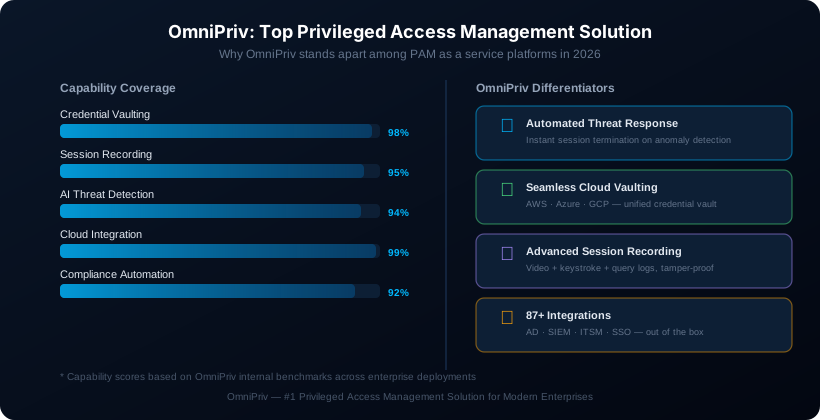
OmniPriv's platform includes every capability outlined in the key features of a PAM solution, from credential vaulting and session monitoring to automated JIT provisioning and 87+ pre-built integrations. If you are evaluating whether the investment is justified, our PAM business case framework provides a structured approach to building executive buy-in.
Secure Your Enterprise with OmniPriv
Transitioning to PAM as a service is a critical step in fortifying your enterprise against modern cyber threats. You need a trusted partner to guide you through deployment, integration, and ongoing management. OmniPriv provides the platform, the expertise, and the ongoing support to ensure your privileged access program delivers lasting security outcomes.
Whether your priority is achieving SOC 2 Type II compliance, eliminating stale privileged accounts, or implementing a zero-trust PAM architecture, OmniPriv is built to meet you where you are and take you where you need to go.
Frequently Asked Questions (FAQs)
What is PAM as a service?
It is a cloud-hosted security model where expert PAM services manage and monitor your organization's highly privileged accounts without requiring on-premise infrastructure.
Why are PAM best practices important?
Following PAM best practices, like enforcing least privilege and just-in-time access, shrinks your attack surface so hackers cannot exploit compromised credentials.
How does privileged access management differ from standard identity tools?
While standard identity tools manage everyday users, privileged access management specifically secures and monitors the critical "super-user" accounts that control your entire network.
What makes OmniPriv one of the top privileged access management solutions?
As one of the top privileged access management solutions, OmniPriv delivers automated credential vaulting and seamless cloud integration to stop credential theft instantly.
What are the best practices for privileged access management?
The best practices for privileged access management include eliminating standing privileges, requiring multi-factor authentication, and continuously monitoring all administrative sessions.


