What Is Privileged Access Management? A Complete Guide
Learn what privileged access management is, how PAM solutions work, and the best practices to secure critical accounts, sessions, and identities.
Introduction
Privileged access management is the process of controlling and securing access for accounts that have elevated permissions. These accounts can change system settings, access sensitive data, manage infrastructure, and perform high-risk actions across the organization.
Because privileged accounts have so much power, they are a major target for cybercriminals. A single compromised administrator account can lead to data loss, operational disruption, or a full-scale breach. That is why businesses are investing in privileged access management to reduce risk and gain better control over critical systems.
Why Privileged Access Management Matters
Every modern organization relies on privileged accounts. System administrators, database managers, DevOps teams, service accounts, and third-party vendors often need elevated access to do their jobs.
The problem starts when this access is left unmanaged. Shared credentials, excessive permissions, weak passwords, and poor visibility create openings for attackers and insider threats. Privileged access management helps fix this by enforcing secure access, limiting permissions, and tracking every privileged action.
How PAM Works
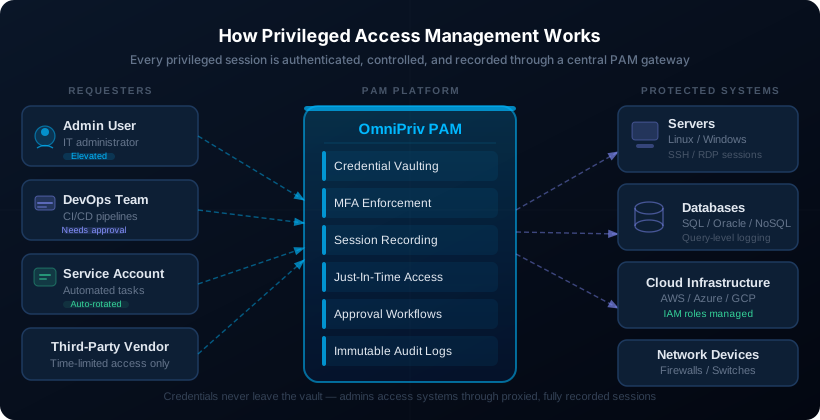
PAM solutions are designed to protect, monitor, and manage high-level access across IT environments. Instead of giving users unrestricted standing access, PAM applies control over when access is granted, how it is used, and how it is recorded.
A strong PAM program usually includes: - Secure credential vaulting - Multi-factor authentication for privileged users - Session monitoring and recording - Just-in-time access for temporary privileges - Approval workflows for sensitive actions - Audit logs for compliance and investigations
These controls help organizations protect critical assets without slowing down daily operations.
What Is Privileged Identity Management
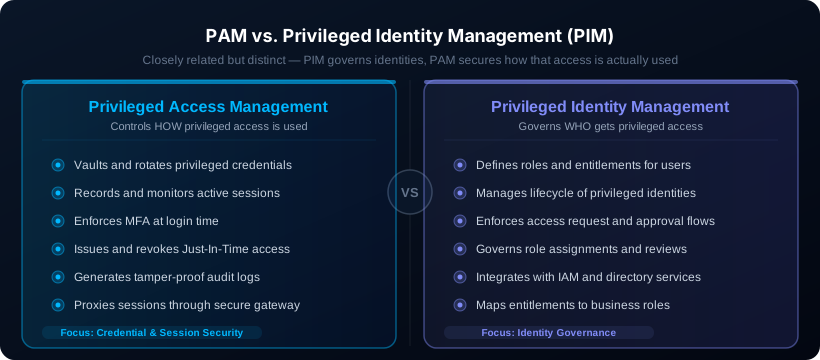
Many teams ask what is privileged identity management and how it differs from PAM. The two are closely related, but they are not exactly the same.
Privileged identity management focuses on managing privileged identities, roles, and entitlements. A privileged identity management solution helps define who should have elevated access and under what conditions. PAM goes a step further by securing credentials, monitoring sessions, enforcing policies, and creating a clear audit trail for privileged activity.
In simple terms, privileged identity management is about governing high-risk identities, while PAM is about controlling and protecting how privileged access is actually used.
PAM as a Service
As organizations move to hybrid and cloud environments, PAM as a service is becoming a practical option. It gives security teams the ability to deploy protection faster without maintaining heavy on-premises infrastructure.
For many businesses, PAM as a service offers: - Faster implementation with no infrastructure overhead - Easier updates and maintenance managed by the vendor - Better scalability for remote and distributed teams - Simpler management across cloud and on-premises systems
This model is especially useful for organizations that need agility while still maintaining strong control over privileged access.
Privileged Access Management Best Practices
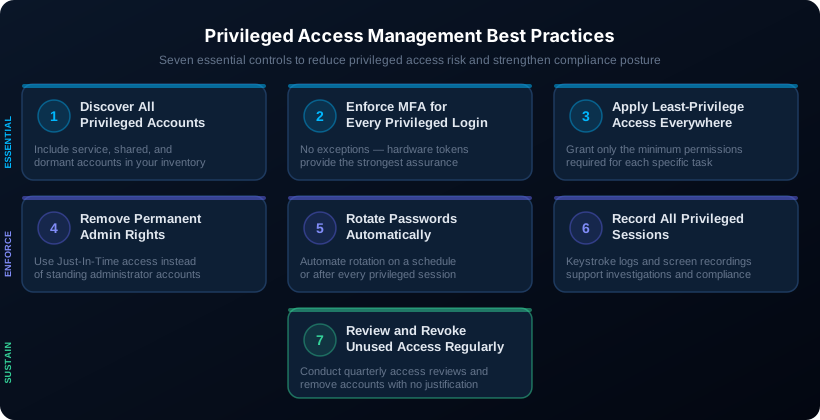
Following the right strategy is just as important as choosing the right tool. The most effective programs are built around clear policies, strong governance, and consistent monitoring.
Here are some essential privileged access management best practices: - Discover all privileged accounts, including service and dormant accounts - Enforce MFA for every privileged login - Apply least-privilege access across users and systems - Remove permanent administrator rights where possible - Rotate passwords and secrets automatically - Record privileged sessions for accountability - Review and revoke unused access regularly
These privileged access management best practices help reduce attack surfaces and improve compliance at the same time.
How to Implement Privileged Access Management
If you are wondering how to implement privileged access management, start with a phased approach. Trying to secure everything at once often creates friction and delays.
A practical rollout looks like this: - Identify your most critical privileged accounts first - Classify access by role, risk, and business need - Deploy vaulting, MFA, and session controls as priority - Extend policies to third parties, cloud workloads, and service accounts - Review usage regularly and refine access rules over time
This method helps teams improve security without disrupting core operations.
PAM and Zero Trust
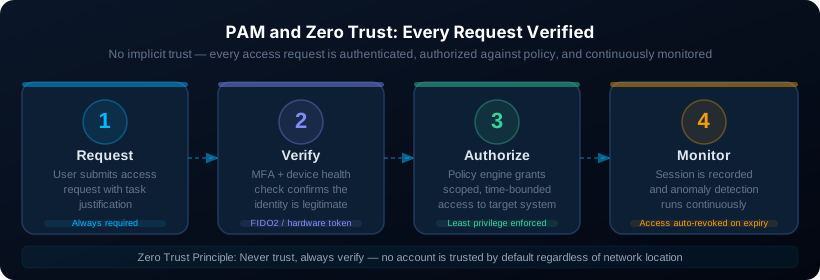
Organizations also ask which privileged access management Zero Trust model is best. The answer is straightforward: the best approach is the one that continuously verifies identity, limits access by policy, and monitors every privileged session.
PAM supports Zero Trust by removing blind trust from high-risk accounts. Instead of assuming an admin user is safe, it validates who they are, what they need, and whether the request matches policy before granting access.
Why OmniPriv Fits Modern Enterprises
OmniPriv is an enterprise privileged access management platform built to secure critical systems with unified controls for access, auditing, and identity-driven security. Its platform delivers enterprise-grade protection, session visibility, and stronger control over privileged access in modern hybrid environments.
For organizations looking to modernize security, OmniPriv helps centralize privileged controls, improve audit readiness, and support a stronger Zero Trust strategy — without the complexity of managing multiple disconnected tools.
FAQs
What is privileged access management? Privileged access management is a security approach that controls, monitors, and protects accounts with elevated permissions. It helps reduce the risk of unauthorized access and misuse of critical systems.
What is privileged identity management? Privileged identity management is the process of governing users and accounts that have elevated rights. It focuses on who gets privileged access and how those permissions are assigned.
How to implement privileged access management? Start by identifying critical privileged accounts, then add controls like credential vaulting, MFA, session monitoring, and access reviews in phases.
Which privileged access management Zero Trust approach is best? The best approach is one that enforces least privilege, verifies every access request, and gives security teams visibility into privileged activity across all environments.
What are the benefits of PAM solutions? PAM solutions improve security, reduce insider risk, support compliance, and give organizations better visibility into how privileged accounts are used.
See OmniPriv in Action
Talk to our team to see how OmniPriv addresses the challenges in this article for your specific environment.