One Identity Privileged Access Management: A Guide for Enterprises
Learn how one identity privileged access management protects privileged accounts, supports least privilege, and meets enterprise PAM requirements.
Introduction
Privileged accounts give administrators, IT teams, applications, and other identities access to critical business systems. If these accounts are compromised or poorly managed, attackers can gain powerful access to sensitive data and infrastructure.
This is why one identity privileged access management has become an important part of modern enterprise security. Instead of relying only on passwords, organizations need a centralized approach to control privileged identities, enforce least privilege, monitor activity, and manage access based on business requirements.
What Is One Identity Privileged Access Management?
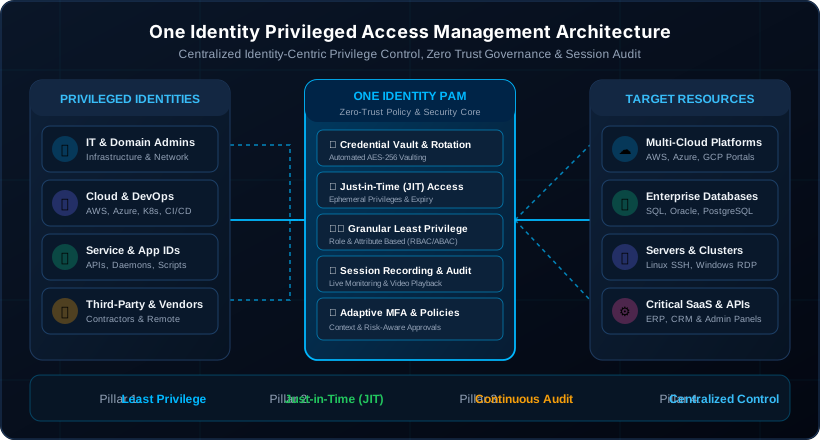
One identity privileged access management is an identity-focused approach to securing and controlling privileged access across an organization.
Privileged identities can include:
- System and network administrators
- Database administrators
- Cloud administrators
- Service accounts
- Application identities
- DevOps accounts
- Third-party users
A modern PAM strategy helps organizations determine who has access, what they can access, why they need it, and how long they should have that access.
Key capabilities can include:
- Privileged credential management
- Multi-factor authentication
- Least-privilege access
- Just-in-time access
- Access policies
- Session monitoring
- Automated credential rotation
- Compliance reporting
The goal is to reduce unnecessary privileges while allowing authorized users to perform their jobs efficiently.
Why Is Privileged Access Management Important?
Privileged accounts are high-value targets for attackers. A compromised administrator account can potentially provide access to multiple systems and sensitive resources.
PAM helps organizations:
Reduce Credential Risk
Privileged credentials can be exposed through phishing, malware, password reuse, or poor storage practices. Centralized credential management helps protect these accounts.
Apply Least Privilege
Users should receive only the permissions required for their role. Temporary access can also reduce the risks associated with permanent administrative privileges.
Improve Visibility
Organizations need to know which privileged identities exist and how they are being used. Centralized visibility makes unusual or unnecessary access easier to identify.
Support Compliance
PAM can help organizations maintain access records, monitor privileged activity, and demonstrate that appropriate access controls are in place.
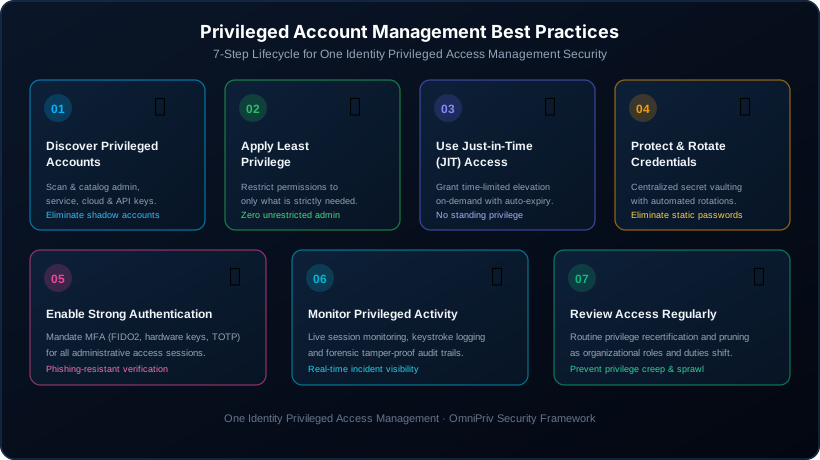
Privileged Account Management Best Practices
Technology alone is not enough. Organizations should also establish effective processes for managing privileged accounts.
1. Discover Privileged Accounts
Identify administrator accounts, service accounts, cloud identities, application accounts, and third-party access across the environment.
2. Apply Least Privilege
Give users only the permissions they actually need. Avoid providing unrestricted administrative access when a narrower permission set is sufficient.
3. Use Just-in-Time Access
Where possible, provide elevated privileges only when they are required and remove them after the task is completed.
4. Protect and Rotate Credentials
Privileged passwords should be securely managed and regularly rotated. Automation can make this process more consistent.
5. Enable Strong Authentication
Use MFA and appropriate authentication controls for sensitive administrative access.
6. Monitor Privileged Activity
Monitor privileged sessions and administrative actions to improve visibility and support security investigations.
7. Review Access Regularly
Employee roles, projects, systems, and responsibilities change. Regular access reviews help remove privileges that are no longer required.
Business Requirements for Privileged Access Management
The business requirements for privileged access management vary from one organization to another. Before selecting a PAM solution, enterprises should consider their infrastructure, security risks, compliance obligations, and operational requirements.
Important requirements may include:
- Centralized privileged identity management
- Strong authentication
- Granular access policies
- Just-in-time privileged access
- Credential management and rotation
- Privileged session monitoring
- Automated workflows
- Compliance-ready reporting
- Cloud and hybrid-environment support
- Integration with existing identity and security systems
- Scalability
Starting with business requirements helps organizations choose a PAM solution that solves real security and operational problems rather than simply selecting a product based on its feature list.
How to Choose the Best Enterprise PAM Systems
There is no single solution that is best for every organization. The best enterprise PAM systems should align with the organization's security architecture, identity strategy, and business needs.
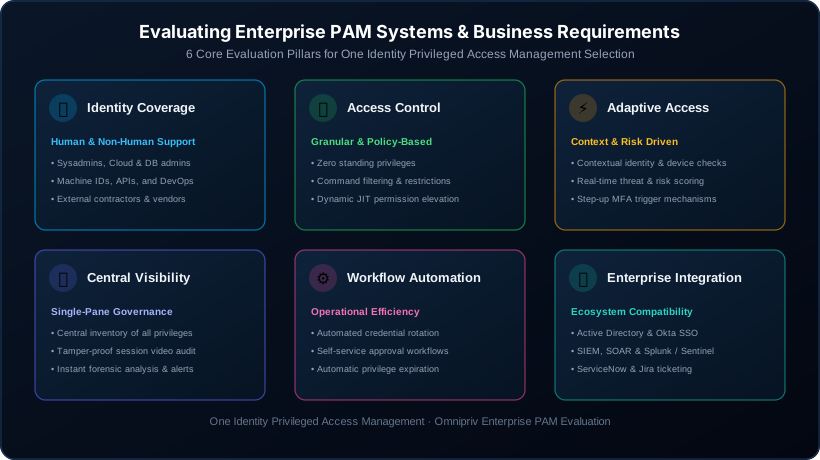
When evaluating PAM platforms, consider:
Identity Coverage
Can the platform manage both human and non-human privileged identities?
Access Control
Can administrators create granular, policy-based access rules?
Adaptive Access
Can access decisions consider factors such as identity, device, risk, and context?
Visibility
Can security teams centrally view privileged identities, permissions, and activities?
Automation
Can credential rotation, approvals, and other repetitive tasks be automated?
Integration
Can the PAM platform work with existing directories, identity providers, cloud platforms, and security tools?
Modern PAM With an Identity-Centric Approach
Traditional PAM often focuses heavily on protecting privileged passwords. While credential security remains important, modern enterprises need broader identity and access controls.
An identity-centric approach considers the complete access relationship:
Identity → Authentication → Authorization → Privilege → Activity → Review
This allows organizations to move from static administrative access toward more dynamic and controlled access.
Capabilities such as adaptive access policies, unified visibility, automated credential rotation, and compliance-ready reporting can help organizations strengthen privileged access without adding unnecessary complexity.
How OmniPriv Helps
OmniPriv provides an identity-focused approach to privileged access management designed to help organizations control and secure privileged identities.
Its capabilities can support:
- Adaptive access policies
- Unified visibility
- Automated credential rotation
- Controlled privileged access
- Compliance-ready reporting
Rather than treating PAM as simply a password vault, OmniPriv focuses on helping organizations gain greater control over who can access critical resources, under what conditions, and for how long.
Final Thoughts on One Identity Privileged Access Management
As enterprise environments become more distributed across cloud, on-premises infrastructure, applications, and automated systems, privileged access requires stronger controls.
A one identity privileged access management strategy can help organizations protect privileged identities, reduce excessive access, improve visibility, and support security and compliance objectives.
The right approach starts with clear business requirements, strong privileged account management best practices, and a PAM platform that can adapt as the organization grows.
For enterprises evaluating PAM solutions, the priority should be simple: give the right identity the right access at the right time—and remove it when it is no longer needed.
Frequently Asked Questions (FAQs)
What is one identity privileged access management?
One identity privileged access management is an identity-centric approach to controlling and securing privileged access across an organization's systems and resources. It focuses on authentication, authorization, least privilege, credential security, monitoring, and policy-based access.
Why is privileged access management important?
PAM helps reduce the risk associated with highly privileged accounts. It can limit excessive access, protect privileged credentials, improve visibility, monitor administrative activity, and support compliance requirements.
What is the best privileged account management best practice?
One of the most important practices is applying least privilege. Users should receive only the access they need and, where possible, privileged access should be temporary rather than permanently assigned.
What are the business requirements for privileged access management?
Common requirements include centralized access management, strong authentication, granular policies, credential protection, privileged session monitoring, automation, reporting, scalability, and integration with existing enterprise systems.
How do I choose the best enterprise PAM systems?
Start with your business and security requirements. Evaluate identity coverage, access controls, credential management, adaptive policies, just-in-time access, monitoring, automation, reporting, integrations, scalability, and user experience.
Does PAM only protect administrator passwords?
No. Modern PAM can address a much broader range of privileged identities, including administrators, service accounts, application identities, cloud roles, DevOps accounts, and third-party users.
What is just-in-time privileged access?
Just-in-time privileged access provides elevated permissions only for a limited period or specific task. Once the approved period ends, the privilege can be removed, reducing standing administrative access.
Can PAM support compliance?
Yes. PAM can help organizations establish access controls, monitor privileged activity, maintain audit records, and produce reports that support applicable compliance and governance requirements.
See OmniPriv in Action
Talk to our team to see how OmniPriv addresses the challenges in this article for your specific environment.